
Building Use
Airport Terminal & Aviation Facility Roofing in Oakland, CA starts with roof evidence.
An airport doesn't run on a commercial timeline
The first thing to accept about roofing at an aviation facility is that the building sets the schedule and the schedule never stops. Oakland International Airport (OAK) operates around the clock - it is Southwest Airlines' principal Bay Area hub, home to major UPS and FedEx cargo operations, and a long-standing, lower-cost alternative to SFO for East Bay travelers. Every access point, every material lift, and every crew deployment has to be coordinated with the airport's facilities department, the FAA's Part 139 safety program, and in some areas TSA security protocols. We build that coordination into the scope before the contract is signed, not after the crew shows up at the gate and finds it can't get airside.
The roofs are big, flat, and unforgiving of standing water
Terminal and cargo roofs cover large, nearly flat expanses, which puts drainage at the center of the design and leaves almost no tolerance for ponding. On a roof this size, a low spot that holds water isn't cosmetic - it shortens membrane life and adds dead load the deck wasn't meant to carry. Most terminal re-roofing here runs a TPO or PVC single-ply over a tapered insulation system engineered to move water to the drains and eliminate the ponding the original construction left behind. We walk the roof with the facilities engineer and develop the slope and drainage plan from what's actually up there, because guessing at drainage on a hundred-thousand-square-foot deck is how you end up back on the same roof in five years.
Jet blast and Bay wind drive the attachment
Airside roofs face loads ordinary buildings never see. Jet blast from engines on the apron, combined with the steady wind coming off San Francisco Bay, generates uplift that exceeds what you'd specify for a comparable warehouse, so membrane adhesion and ballast or fastening have to be designed for it specifically. Edge metal and perimeter attachment get particular attention, because the perimeter is where wind uplift concentrates and where a roof on an exposed airfield begins to peel if it was built to a generic schedule.
HVAC density and continuous operations
Terminals carry far heavier and denser mechanical loads than standard commercial buildings, which means more curbed penetrations, larger equipment, and more flashing touchpoints to maintain. Our pre-project survey documents every penetration, curb height, and clearance before we write the work plan, and oversized equipment curbs get flashing details engineered individually rather than off a standard pattern. Because the terminal can't go dark, the sequence is built so passenger flow, baggage operations, and the mechanical systems serving them keep running while the roof above them is being replaced.
Beyond the terminal: cargo, FBO, and hangars
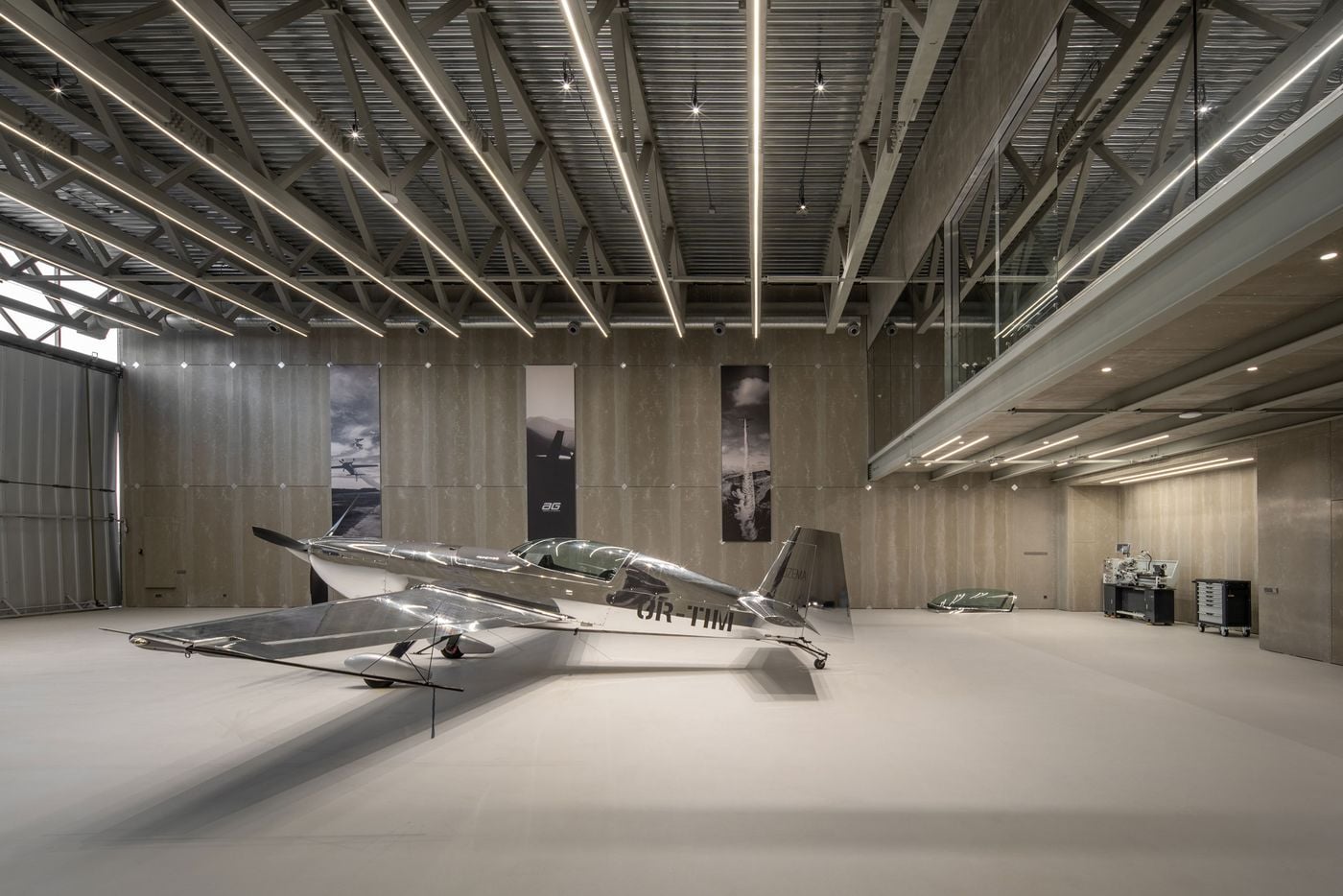
OAK's large UPS cargo campus and the airport's role as the affordable East Bay gateway keep steady roofing demand across cargo buildings, rental-car centers, on-airport hotels, and aircraft maintenance facilities. The building types differ, but the airport-coordination requirement doesn't go away anywhere on the campus - badging and security access are planned for, never improvised onsite. General aviation brings its own challenge: FBOs and high-bay hangars have lighter security but more demanding structures, with large clear-span roofs that require specific fastening patterns and seam geometry to handle their wind uplift. For new high-bay aviation buildings, standing seam metal is often the right call over a single-ply membrane.
Area airfields that serve the same market
Oakland travelers and shippers also move through the other major Bay Area airports, and we work across the region's aviation building stock, not just at OAK.
- San Francisco International Airport (SFO) - the region's primary international hub, roughly twenty miles north
- Norman Y. Mineta San Jose International (SJC) - the South Bay commercial option, about thirty miles south
Airport & Aviation Roofing Questions
How do you schedule work at an operating airport like Oakland International?
We develop a phased plan with the airport facilities department and the FAA Part 139 coordinator and get it approved by airport operations. Material deliveries, crane lifts, and any airside work happen in approved windows, coordinated with the FAA NOTAM process where required. This is a standard part of our project setup, not an exception we improvise.
What roof systems suit large-span terminal roofs?
Most terminal re-roofing uses TPO or PVC single-ply over a tapered insulation system designed to improve drainage and kill ponding. For new high-bay aviation structures and hangars, standing seam metal is often specified. The choice depends on the existing deck, load capacity, and operational constraints, and we develop it after walking the roof with the facilities engineer.
How do you handle the density of HVAC and mechanical penetrations?
Terminal HVAC density runs well above standard commercial. Our pre-project survey documents every penetration, curb height, and clearance before the work plan is written, and oversized or complex curbs get flashing details engineered individually. We don't apply standard small-building flashing patterns to aviation structures.
Can you work on airside structures near active aprons and runways?
Yes, with appropriate badging and full coordination with airfield operations. Airside work takes more pre-planning and crew credentialing, which we build into the bid timeline. We do not mobilize anyone without confirmed airside authorization - that's a baseline requirement we enforce.
Do you handle hangar roofing for FBOs and general aviation?
Yes. Hangar roofing - from a single-bay private hangar to a multi-unit FBO complex - is a regular part of our work around Oakland. High-bay hangars on wide-flange steel or pre-engineered building systems have specific uplift and thermal-movement characteristics, and we specify and install systems built for them.