
Owner Group
Data Center Roofing in Oakland, CA starts with roof evidence.
Oakland sits at the center of one of the densest concentrations of digital infrastructure in the world. The Bay Area's data center ecosystem radiates outward from Silicon Valley, and Oakland has become an increasingly important node in that network, with facilities like Equinix's SV8 campus and a growing cluster of colocation and enterprise computing operators drawn by the city's fiber connectivity, power infrastructure, and proximity to major enterprise clients across the East Bay. Oakland Digital and Corelink Bay Area data centers represent the kind of carrier-neutral colocation environment that demands roofing systems capable of protecting infrastructure serving thousands of simultaneous tenants.
The Port of Oakland's IT infrastructure adds a dimension to the local data center market that goes beyond conventional enterprise computing. Port operations depend on real-time data systems for container tracking, customs processing, vessel scheduling, and supply chain coordination across one of the most active container ports on the West Coast. The computing facilities supporting those operations must maintain near-continuous availability because a system outage during active port operations can cascade into economic losses that are measured by the hour. Roofing systems on Port IT facilities carry an implicit uptime requirement that most commercial buildings never face.
Bay Area climate creates a roofing environment that is deceptively benign on the surface but technically demanding on close examination. Temperatures rarely reach extremes in either direction, and rain - while periodic - is generally not the severe storm-driven precipitation that challenges East Coast or Gulf Coast facilities. What Oakland does produce is a unique combination of marine fog, coastal wind, and thermal cycling that stresses roof assemblies in ways that are less obvious but equally damaging over time. Salt-laden fog condenses on rooftop equipment and membrane surfaces, accelerating corrosion and degrading adhesive bonds in improperly specified membrane systems.
Seismic resilience is a non-negotiable requirement for Data Center Roofing in Oakland. The city sits near active fault systems, and a significant seismic event will subject rooftop mechanical equipment to lateral forces that stress equipment curb flashings, penetration collars, and the mechanical attachments that hold equipment in place. Roofing systems here must be specified with seismic restraint of rooftop equipment as a design requirement, and the flashings around mechanically restrained equipment must accommodate the movement those restraints allow rather than being rigidly tied to the structure in a way that causes tearing during ground motion.
Energy efficiency requirements in California have pushed Data Center Roofing specifications toward high-performance assemblies well ahead of where other states are today. California's Title 24 energy code establishes some of the most demanding commercial roofing requirements in the country, with cool roof requirements, insulation minimums, and system performance standards that apply to data center facilities alongside all other commercial construction. Contractors working on Oakland data center projects must be thoroughly familiar with Title 24 compliance documentation requirements, because the permitting process here rigorously enforces those standards and projects that cannot demonstrate compliance face significant delays.
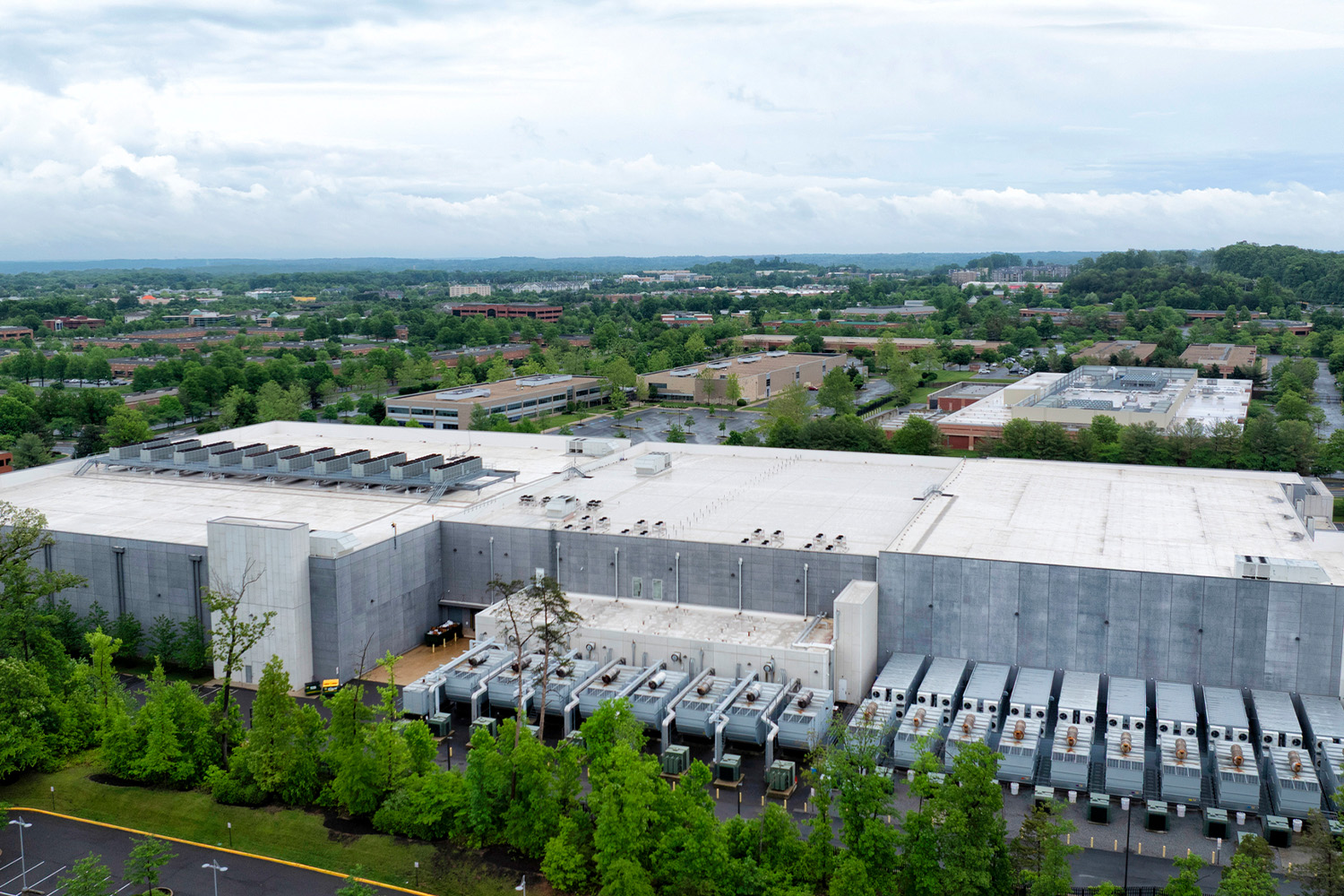
The rooftop equipment density on Bay Area data centers is typically higher than in less expensive real estate markets. When land is expensive, operators concentrate more infrastructure per square foot of floor plate, and that concentration extends to the roof - more cooling equipment, more power distribution infrastructure, more fiber entry points per acre of roof surface than a comparable facility in the inland US would carry. Each piece of equipment is a penetration, a curb flashing, a vibration source, and a maintenance access requirement. Contractors who have not worked in high-density equipment environments will produce work that looks acceptable but fails prematurely as the cumulative effect of dozens of individual flashing systems is tested by the environment.
Vapor management in Oakland's moderate but marine-influenced climate requires a different analysis than colder or more humid markets. The interior conditions of a data center - typically 65–75°F with tightly controlled relative humidity - can create a vapor drive toward the cooler, fog-conditioned exterior during certain times of year. A simple vapor retarder approach that works in a dry inland climate may trap moisture in an Oakland assembly during the wet season. The correct approach is a hygrothermal model that accounts for Oakland's specific climate data, the particular interior conditions of the facility, and the vapor permeability of each layer in the proposed assembly.
Ongoing maintenance of data center roofs in Oakland benefits from the relatively mild weather that allows inspection and repair work to be scheduled without the weather urgency that drives maintenance decisions in more extreme climates. This can paradoxically lead to deferred maintenance, because the consequences of neglect are less immediately obvious here than in a market where a severe winter will expose deficiencies quickly. Facility managers should resist the temptation to extend inspection intervals beyond once or twice annually, because the marine environment still produces degradation that accumulates invisibly - fog-deposited contaminants on membrane surfaces, corrosion in metal components, and slow moisture migration through degraded seams that only infrared scanning will detect.
The contractor selection process for Oakland Data Center Roofing should weight California-specific experience heavily. Title 24 compliance expertise, familiarity with Bay Area permitting processes, and relationships with local material suppliers who can support rapid response to maintenance needs are all practical advantages that contractors operating primarily outside the state cannot easily replicate. The combination of technical complexity, regulatory stringency, and the high value of the infrastructure being protected makes this a market where the cost difference between a specialist and a generalist contractor is not the right basis for decision-making.
Data center operators in Oakland who invest in roofing systems engineered for the specific demands of this environment - seismic resilience, marine corrosion resistance, Title 24 compliance, and the high penetration density that large computing facilities produce - will see substantially better long-term performance than those who specify standard commercial systems. The roof is one of the lowest-cost components of a data center's capital budget, but its failure creates losses that are disproportionately large. Getting the roofing specification right is one of the clearest examples in commercial construction of where investing in quality pays for itself many times over.
Frequently Asked Questions
Do California Title 24 cool roof requirements apply to data centers in Oakland?
Yes. Title 24 Part 6 applies to commercial buildings including data centers, and Oakland's climate zone designation triggers specific cool roof requirements for low-slope roofing. The code establishes minimum aged solar reflectance and thermal emittance values for membrane products. TPO membranes with Energy Star ratings generally comply, but contractors must provide documentation from the Cool Roof Rating Council database to demonstrate compliance during permitting. Some exemptions exist for facilities with specific energy characteristics, but they require documentation and engineering justification.
How should rooftop mechanical equipment be secured on an Oakland data center to withstand earthquakes?
Mechanical equipment should be mounted on seismically rated curbs and restrained with code-compliant seismic restraint systems designed by a licensed engineer. The roofing system around those curbs must be detailed to accommodate the movement that seismic restraints allow - typically using flexible flashing boots or bellows-style transitions rather than rigid metal flanges. Equipment anchorage calculations should be reviewed against the latest ASCE 7 seismic provisions for Oakland's mapped acceleration values.
What causes premature membrane degradation on Oakland data center roofs?
Marine fog is a significant contributor - the salt and organic material deposited by coastal fog accumulates on membrane surfaces and promotes biological growth that degrades surface coatings over time. UV exposure, while less intense than in southern California, still drives gradual membrane weathering. Vibration from rooftop cooling equipment stresses seams and penetration flashings over years of continuous operation. Regular cleaning of membrane surfaces to remove biological deposits, combined with annual inspection of all mechanical equipment flashings, significantly extends service life.
Is a fully adhered or mechanically attached membrane system better for Oakland data centers?
Fully adhered systems are generally preferred for mission-critical facilities because they provide superior wind uplift resistance and eliminate the potential for billowing - the membrane inflation that occurs with mechanically attached systems in high-wind events and stresses seams over time. Oakland's coastal wind exposure makes billowing resistance a meaningful design consideration. Fully adhered systems also perform better under the point loads and movement associated with rooftop equipment in a seismically active area.
How do I manage the high density of roof penetrations on a Bay Area data center?
Pre-manufactured penetration sleeves and engineered conduit clusters are more reliable than field-fabricated individual penetration flashings when dozens of penetrations are concentrated in a small area. Consider a secondary waterproofing layer - fluid-applied reinforced membrane - applied around high-density penetration clusters as a backup system. Establish a documented inventory of all penetrations at time of installation, and update it whenever equipment is added or changed; undocumented penetrations are a common source of leaks that are difficult to trace after the fact.