
Building Use
Mixed-Use Development Roofing in Oakland, CA starts with roof evidence.
One building, several roofs that don't behave alike
Mixed-use development is reshaping huge stretches of Oakland - the Brooklyn Basin waterfront, the residential towers going up around Uptown and Lake Merritt BART, the live-work conversions in Jack London Square, and the transit-oriented blocks along Broadway and the Telegraph corridor. From the curb these look like single buildings, but to a roofer they are three or four different projects stacked vertically: ground-floor retail, a podium deck, residential or office floors above, and frequently structured parking woven into the base. Each layer carries its own occupancy, its own loads, and its own way of failing. Treating the whole thing as one flat plane is how mixed-use roofs end up leaking into a tenant's unit two years after the ribbon-cutting.
The podium deck is waterproofing, not roofing
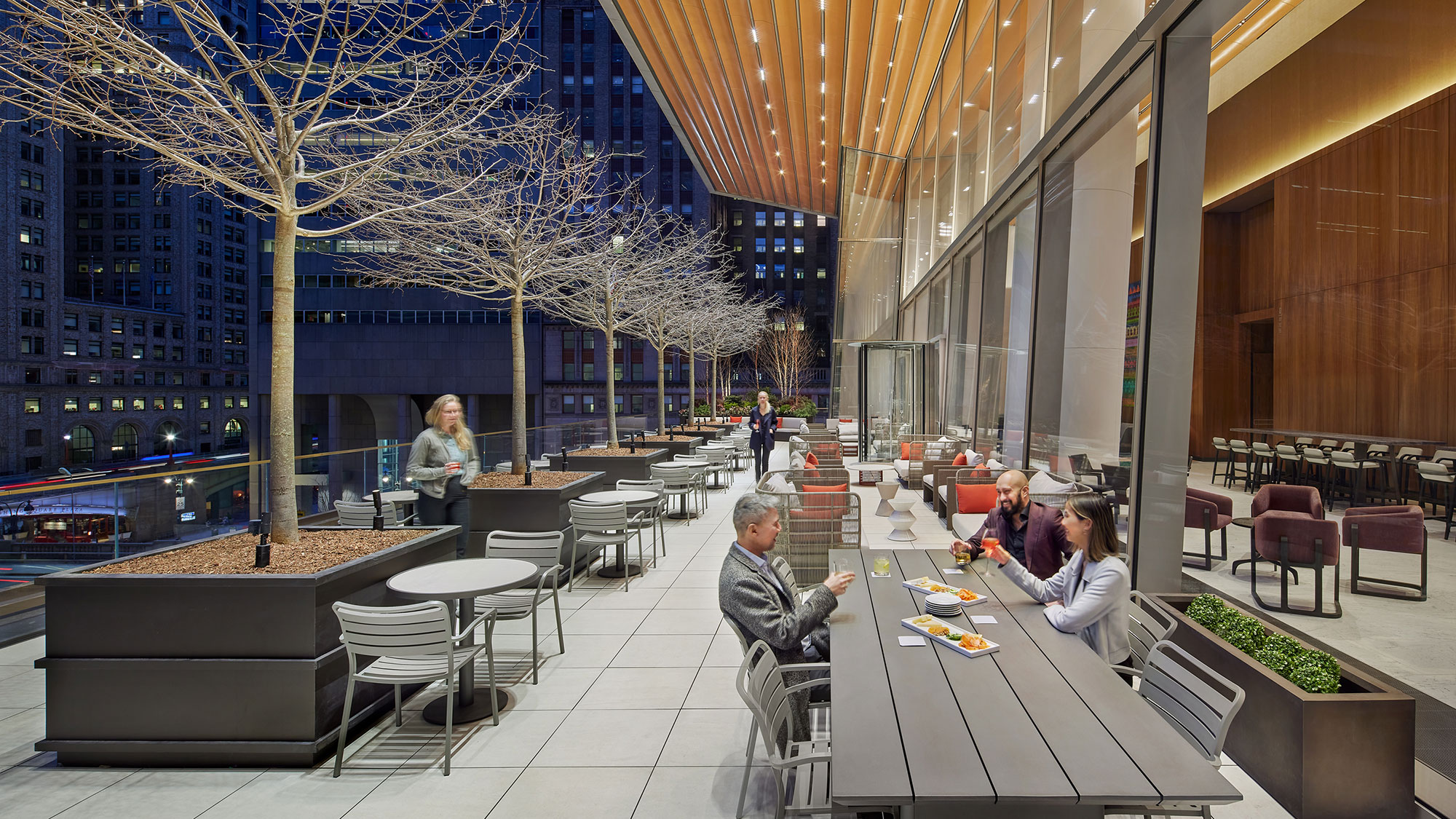
The deck that sits between retail or parking at grade and the occupied floors above is the part of a mixed-use building that gets misjudged most often. It is not a low-slope roof with foot traffic - it is a structural slab carrying landscaping, pavers, fire-lane vehicle loads, or an occupied plaza, and the assembly under it has to take constant hydrostatic pressure, structural deflection, and root intrusion from planters. That calls for a traffic-bearing waterproofing system with drainage composite, protection board, and a root barrier in landscaped zones, all detailed against the deck's real use. A standard single-ply membrane dropped onto a plaza deck is the wrong product, and on these Oakland projects it tends to surface as a leak into the retail or garage below within a handful of years.
Tower roofs add their own list
Up top, the main roof of a residential or office tower brings parapet drainage, a mechanical penthouse with flash-through details, elevator overrun and machine-room enclosures, and tie-ins to the building envelope consultant's air and water barriers. Oakland's mid- and high-rise mixed-use buildings frequently put a rooftop amenity deck up there too, which means a traffic-bearing assembly under the finish surface rather than an exposed membrane. We coordinate those tie-ins with the structural engineer and the deck-finish contractor so the warranty actually holds across the seam between trades.
Working above occupied retail and homes
By the time roofing happens - whether on a new tower, an adaptive reuse of an old warehouse, or a renovation - there are usually people living and shopping below. Oakland's noise ordinance limits when we can run loud equipment, ground-floor retail dictates how we stage and hoist material, and work at height over a public sidewalk drives the overhead-protection plan. We build all of that into a phasing sequence before mobilization, contain dust and debris, and confirm a watertight dry-in in writing at the end of every shift, because there is no acceptable version of water reaching a leased unit overnight.
Warranty coordination across mixed assemblies
A mixed-use roof rarely carries one warranty. The tower membrane, the podium waterproofing, and the amenity-deck assembly may each come from a different manufacturer with its own inspection and registration requirements, and a construction lender will want all of it documented. We work inside the project's submittal and quality-control framework - architect-reviewed submittals, manufacturer technical approval, mock-up testing where the spec calls for it, rep inspections at the milestones that matter, and clean warranty registration at closeout - so ownership ends up with coverage that lines up at the transitions instead of gaps between systems nobody owns.
Built for Oakland's developers, GCs, and owners
On ground-up work we coordinate with the general contractor, the MEP subs, the structural engineer, and the envelope consultant at the same time, and we speak the language of the submittal log and the testing protocol that mixed-use jobs run on. On existing buildings we work with property managers and HOA boards who inherited a roof somebody else built and now need it corrected without emptying the building. Either way, the goal is the same: a roof and waterproofing package that performs across every use under the same address.
Mixed-Use Development Roofing Questions
Why can't a standard roof membrane go on a podium or plaza deck?
A roofing membrane is built for drainage and light maintenance traffic. A podium or plaza deck has to handle structural deflection, root intrusion from planters, constant water pressure in landscaped areas, and pedestrian or even vehicle loads. That requires a traffic-bearing waterproofing assembly with drainage and protection layers. Using a standard membrane in that location is a specification error that usually fails early and shows up as a leak into the space below.
How do you roof a building that is already occupied by residents and retail?
We build a phasing plan that sequences the work to limit impact on residents and storefronts, and we honor Oakland's noise limits on loud equipment. Dust and debris containment is set up before mobilization, overhead protection covers any public walkway, and we confirm a watertight dry-in in writing each day. Building management and affected tenants get advance notice of access and hoisting.
Can you handle rooftop amenity decks on the tower?
Yes. An amenity terrace needs a traffic-bearing waterproofing assembly under the finished surface, not an exposed membrane. We specify, install, and warranty that assembly in coordination with the deck-finish contractor and the structural engineer so the system holds up under furniture, planters, and steady foot traffic.
What documentation do developers and lenders expect?
Typically architect-reviewed submittals, manufacturer technical approval of each system, mock-up testing where required, quality-control inspection reports, manufacturer rep inspections at key phases, and warranty registration at closeout. We work inside whatever submittal and QC framework the project already runs from preconstruction through final inspection.
How do you keep the warranties from conflicting between systems?
We coordinate the tower membrane, the podium waterproofing, and any amenity-deck assembly so their transitions are detailed and registered correctly, even when they come from different manufacturers. That way coverage lines up at the seams rather than leaving a gap at the points most likely to leak.