
Roof Work
Government and Municipal Building Roofing in Oakland, CA starts with roof evidence.
Oakland, California's civic building portfolio is as diverse as the city itself, ranging from the ornate Oakland City Hall at Frank Ogawa Plaza-a 1914 Beaux-Arts skyscraper that survived the 1906 earthquake aftermath and major restoration after the 1989 Loma Prieta event-to the functional concrete structures housing Oakland Police Department area command stations, the Alameda County Courthouse complex on Fallon Street, and the branches of the Oakland Public Library scattered across the city's flatland and hillside neighborhoods. All of these facilities share the Bay Area's climate challenges: the corrosive marine layer that rolls in from San Francisco Bay, the seismic risk that elevates roofing attachment and coping design standards, and the wildfire-driven particulate events that can compromise roof membrane integrity over time.
The City of Oakland's Procurement Services Division administers competitive bidding for public facility roofing under California's Public Contract Code. Contracts above the formal bid threshold must be publicly advertised in a newspaper adjudicated in Alameda County and posted on the city's bid portal, which connects to the statewide PlanetBids procurement platform. California requires that contractors hold a valid C-39 Roofing Contractor license issued by the Contractors State License Board before bidding any roofing work as a prime or subcontractor. The C-39 license requirement is strictly enforced at bid review; bids from unlicensed contractors are rejected outright, and prime contractors who list unlicensed roofing subcontractors in their bid submissions face disqualification as well.
California's prevailing wage law, Labor Code Section 1720 et seq., applies to all public works construction contracts in the state, and the scope of what constitutes public works under California law is broader than the federal definition. The California Department of Industrial Relations administers prevailing wage enforcement, and DIR registration is required for all contractors and subcontractors on covered projects before work begins. DIR-registered contractors must submit electronic certified payroll records through the DIR's eCPR system, and compliance monitoring is active and ongoing. Oakland public facility projects that also receive federal funding trigger Davis-Bacon requirements, and the applicable rate is the higher of the California or federal rate for each trade classification. California's prevailing wages for roofing trades in the Bay Area are substantially higher than in most other states.
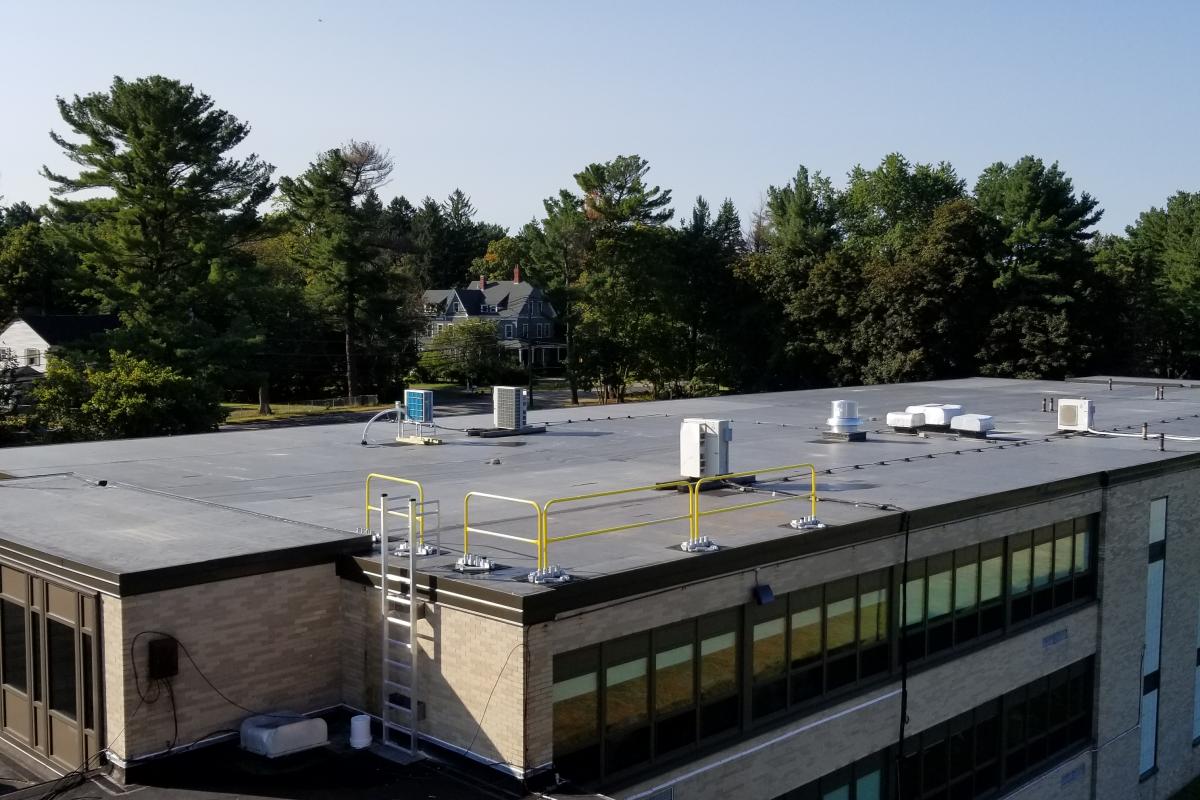
Seismic design requirements shape roofing attachment systems on Oakland public buildings in ways that differ from most other American cities. The Bay Area's position near active fault systems requires that roofing systems, particularly edge metal assemblies, equipment curbs, and mechanical screen systems, be designed and attached to resist seismic forces in addition to standard wind uplift loads. Spec writers for Oakland public facilities increasingly reference AISC seismic design requirements for non-structural components and require that rooftop equipment supports be engineered and stamped by a licensed California structural engineer. Roofing contractors who work in Oakland need to understand that their scope extends into seismically designed perimeter and equipment anchorage details that go beyond standard commercial roofing practice.
Oakland City Hall is a designated City of Oakland Landmark and a National Register-listed property, and roofing work on this building or adjacent civic center structures requires review through multiple channels. The Oakland Cultural Heritage Survey tracks the city's historically significant buildings, and exterior alterations to landmark structures require Landmark Alteration Permits reviewed by the Oakland Landmarks Preservation Advisory Board. Additionally, the State Historical Building Code provides alternative compliance paths for historic structures that allow departures from current code if strict application would threaten the building's historical character. Projects on City Hall require coordinated consultation with the landmarks board, the State Historic Preservation Office, and the city's Building Services Division.
California's Title 24 energy standards establish mandatory cool-roof requirements for low-slope roofing on newly constructed and substantially renovated public buildings. Alameda County's climate zone (Zone 3) requires minimum solar reflectance and thermal emittance values for low-slope roofing that effectively mandate white or light-colored membrane products. Oakland's own Energize Oakland sustainability program and the city's participation in the Bay Area Regional Energy Network create additional energy efficiency expectations for public facilities. Green roof assemblies are permitted by the State Historical Building Code as alternative compliance paths in some circumstances, and the East Bay Municipal Utility District offers planning resources and some cost-sharing for projects that incorporate water-efficient landscaping into green roof designs.
California's Little Miller Act establishes bonding requirements for public works contracts. Performance and payment bonds, each at 100 percent of the contract value, are required for public works contracts over $25,000. Bid bonds of ten percent are standard on Oakland solicitations. California also requires that bonds be issued by admitted surety insurers as defined in the California Insurance Code, a specific authorization status that differs from simple Treasury Circular 570 listing. Contractors should verify that their surety holds California admitted status before bidding, as non-admitted bonds are not acceptable and cannot be cured after bid opening.
Alameda County manages the Superior Court facilities and the County Administration Building on 14th Street through its General Services Agency, and county roofing projects follow a procurement process separate from the city's. The county's contracts above threshold are bid through the county's purchasing portal and are subject to California prevailing wage requirements with Alameda County-specific wage rates that may differ from Oakland city rates. Contractors pursuing the full range of government roofing work in Oakland's civic geography need to maintain procurement relationships with both entities and should monitor both the city and county portals for relevant solicitations.
Project labor agreements and local hire requirements have become increasingly common on Oakland public facility contracts. Some major capital projects include PLAs that require contractors to hire union labor and may establish local hire percentages for workers residing in Oakland or Alameda County. These requirements are typically disclosed in the bid documents but can significantly affect labor cost modeling in pre-bid estimates. Contractors who have not previously worked under a PLA or local hire requirement in Oakland should review the agreement terms carefully and account for the potential impact on crew composition and wage rates before submitting pricing.
- What contractor license is required to bid Oakland public roofing contracts?
- A valid California C-39 Roofing Contractor license issued by the Contractors State License Board is required to bid roofing work as a prime or subcontractor on Oakland public projects. The C-39 license must be current and in good standing at bid submission. Bids from unlicensed contractors are rejected, and general contractors who list unlicensed roofing subcontractors in their proposals face disqualification.
- What DIR registration requirements apply to Oakland municipal roofing projects?
- All contractors and subcontractors on California public works projects must register with the California Department of Industrial Relations before beginning work. DIR registration must be in place before work starts, not just before bid submission. Registered contractors are required to submit electronic certified payroll records through the DIR's eCPR system throughout the project. Failure to maintain current DIR registration can result in contract termination.
- How do seismic design requirements affect roofing on Oakland public buildings?
- Oakland's high seismic risk zone requires that roofing edge metal assemblies, equipment curbs, and mechanical screen systems be designed to resist seismic forces in addition to wind uplift. These anchorage details typically require engineering review and stamped drawings from a licensed California structural engineer. Contractors must install these details in compliance with the engineered design documents, and inspections may be required before covering anchor points.
- What California cool-roof requirements apply to Oakland public building roofing projects?
- California's Title 24 energy standards require minimum solar reflectance and thermal emittance values for low-slope roofing in Alameda County's climate zone, effectively requiring white or light-colored membrane products on covered buildings. Oakland's participation in regional energy efficiency programs creates additional expectations beyond the code minimums for publicly funded facilities. Contractors should verify that proposed membrane products meet Title 24 requirements and submit documentation during the submittal review phase.
- What bonding is required under California's Little Miller Act for Oakland public roofing contracts?
- California's Little Miller Act requires performance and payment bonds each at 100 percent of contract value for public works contracts over $25,000. Bid bonds of ten percent are standard on Oakland solicitations. All bonds must be issued by surety companies that hold admitted surety insurer status in California under the California Insurance Code, which is a specific authorization distinct from Treasury Circular 570 listing.