
Owner Group
Retail Chain Operators in Oakland, CA starts with roof evidence.
A Retail Chain Operators call from Berkeley usually begins with a roof condition that is already affecting operations. This buyer group usually owns or manages regional and national stores with repeatable standards, but the pressure is night work, signage protection, and consistent scope reporting. For Retail Chain Operators, we write recommendations so a facility director, property manager, asset manager, adjuster, or procurement lead can compare roof options without translating contractor shorthand.
Retail Chain Operators in Oakland has to be planned around East Bay exposure instead of a clean-room specification. Marine moisture, winter rain, wind, heat spikes, roof equipment traffic, tenant access, and older repairs can all change the correct answer for Retail Chain Operators. For Retail Chain Operators planning, The Metropolitan Transportation Commission coordinates transportation planning across the nine-county Bay Area, which matters for I-880, I-580, I-980, BART-adjacent, port, and airport roof logistics. That local fact changes the Retail Chain Operators inspection because roof drains, low areas, edges, curbs, wall transitions, and repair history need more than a quick visual check from a ladder.
Our first step for Retail Chain Operators is to identify what the existing roof is actually doing. For Retail Chain Operators, we document membrane type, roof age if known, deck condition, slope, insulation profile, drainage, parapets, coping, gutters, scuppers, curbs, wall transitions, pipe penetrations, skylights, and any interior leak pattern. If this owner group can be repaired with confidence, we explain the repair. If the Retail Chain Operators roof is past that point, we show the conditions that make another patch cycle unreliable.
For Retail Chain Operators, product names matter only when they are tied to the roof assembly in writing. If a manufacturer-covered system enters the Retail Chain Operators discussion, we separate product line, installer requirements, inspection expectations, closeout forms, owner maintenance obligations, and the limits of any written coverage.
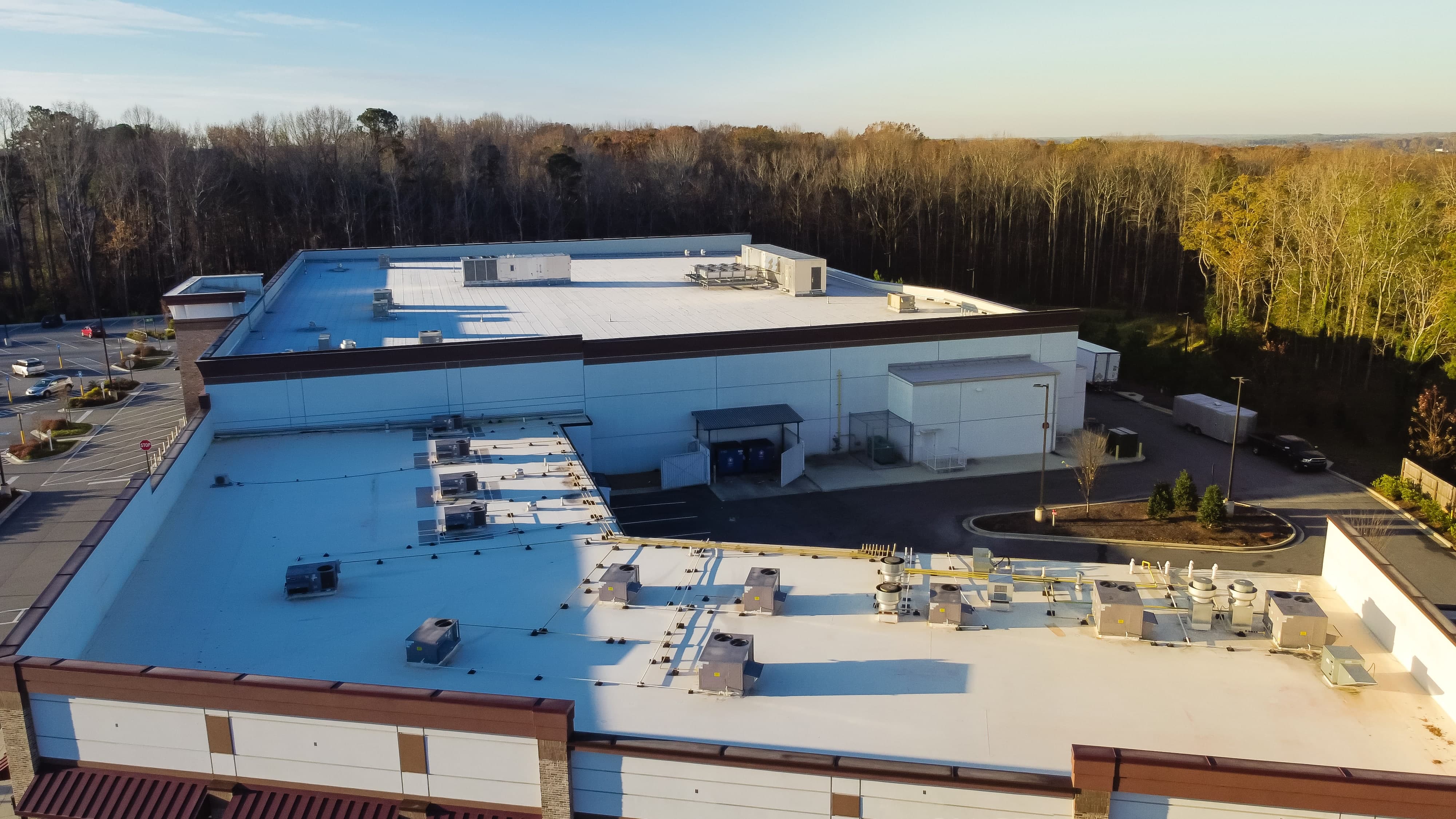
Material selection for Retail Chain Operators depends on the roof, not on a single favorite system. A white TPO or PVC assembly may fit Retail Chain Operators on a broad low-slope roof where reflectance, welded seams, and rooftop equipment access matter. Modified bitumen or built-up roofing may be more practical for Retail Chain Operators on an older roof with many transitions. Silicone coating may extend service life for Retail Chain Operators when the membrane is sound, preparation is realistic, and ponding details are addressed. Metal work may be the right answer for Retail Chain Operators where fasteners, laps, corrosion, and movement control the risk.
Pricing for Retail Chain Operators is driven by roof access, tear-off volume, wet insulation, deck repair, roof height, edge metal, drain work, staging, after-hours restrictions, custom fabrication, and how much occupied space must stay protected. A simple Retail Chain Operators repair near Berkeley is a different project than a phased reroof over a warehouse, school, medical office, hotel, restaurant, church, distribution center, or government building. We write Retail Chain Operators estimates so ownership sees what is included, what is excluded, and which hidden conditions could change the final scope.
Code and energy review matter for Retail Chain Operators because California reroof work often intersects with Title 24 and local inspection requirements. For Retail Chain Operators permitting and product selection, The Broadway address places this site near downtown office towers, BART, City Center, the federal and civic district, Jack London Square, and I-880 access. For Retail Chain Operators, we watch for recover limits, insulation changes, product-rating documentation, cool-roof requirements, deck repairs, drainage changes, and rooftop equipment supports that need to be settled before crews open a large section of roof.
Occupied-building control is a major part of our Retail Chain Operators planning. For Retail Chain Operators, we map access routes, parking impacts, loading zones, dumpster locations, crane or lift windows, roof loading, noise windows, interior protection, tenant notices, and daily housekeeping before work starts. For Retail Chain Operators at operating facilities, the crew plan has to be visible to the site contact without turning every roof decision into a business interruption.
Weather readiness is built into our recommendations for Retail Chain Operators. For Retail Chain Operators weather readiness, The Port of Oakland also lists Oakland Airport at 2,600 acres with 13 airlines and commercial real estate holdings of 837 acres with 100 tenants. Before a forecast wind or rain event, Retail Chain Operators roofs may need loose metal secured, open work protected, drains cleared, scuppers checked, temporary tie-ins inspected, and active leaks stabilized. After weather moves through on a Retail Chain Operators roof, the priority is checking perimeter edges, uplift patterns, punctures, seams, coating fractures, rooftop equipment, skylights, and wet insulation.
Documentation for Retail Chain Operators should be useful months after the crew leaves. For Retail Chain Operators, we use roof photos, marked observations, scope notes, deficiency priorities, daily progress records, repair logs, and closeout notes so the next budget meeting is not based on memory. For portfolios, Retail Chain Operators records show which sections were repaired, which drains need repeat cleaning, where water has entered before, and which roof areas are moving toward replacement.
Roof traffic often decides how long Retail Chain Operators work lasts. On Retail Chain Operators roofs, HVAC technicians, sign vendors, solar contractors, grease-hood service crews, telecom workers, maintenance staff, and security vendors may all cross the same roof after closeout. For Retail Chain Operators, that affects walkway pads, pipe supports, curb repairs, access ladders, tie-in locations, coating thickness, fastener choices, and whether the owner needs scheduled maintenance instead of waiting for the next leak call.
Local building stock gives Retail Chain Operators a wide range of roof conditions. For Retail Chain Operators service-area planning, Oakland Planning and Zoning points owners to planning codes, building codes, zoning maps, active planning applications, and the Oakland 2045 General Plan process. During Retail Chain Operators reviews, we may see older asphalt roofs downtown, white single-ply roofs on newer office and retail buildings, coated roofs on warehouses, exposed-fastener metal in industrial areas, and patch-heavy roof fields near port, airport, or rail-served buildings. The right Retail Chain Operators scope depends on which of those conditions is actually on the building.
We keep the Retail Chain Operators conversation direct because commercial owners do not benefit from vague promises. For Retail Chain Operators, we do not add unsupported claims. For Retail Chain Operators, the useful answer is a roof scope that explains current conditions, near-term leak risk, code and energy considerations, system choices, access limitations, tenant impacts, and the cost difference between temporary repair, restoration, recover, and full replacement.
The best time to discuss Retail Chain Operators is before the roof controls the calendar. Oakland buildings tied to Retail Chain Operators can fail in stages: one detail opens, water reaches insulation, another weather cycle expands the path, and interior damage forces a rushed decision. Calling early about Retail Chain Operators gives us room to inspect, document, price responsible options, order compatible materials, and plan work around operations instead of reacting after a preventable roof problem has grown.