
Building Use
Funeral Home & Mortuary Roofing in Oakland, CA starts with roof evidence.
Roofing based on grief, not around our calendar
A funeral home is one of the few commercial buildings in Oakland that is almost never empty and almost never quiet on the inside. Visitations stretch into the evening, services can be scheduled on a day's notice, and the preparation area runs on the timing of death calls rather than a contractor's work plan. Along Telegraph Avenue, through the Fruitvale and Dimond districts, and across the older neighborhoods near Lake Merritt and East Oakland, many of these facilities are long-established, family-run mortuaries housed in buildings that have served the same community for decades. We treat a reroof on one of these properties the way we would treat work on a chapel or a hospital wing - with a crew that keeps its head down, keeps the noise off the service spaces, and leaves the front of the building looking the way grieving families expect to find it.
The preparation room changes the whole roof plan
The single detail that separates funeral home roofing from ordinary low-slope commercial work sits over the preparation and embalming area. That room runs under negative pressure to keep formaldehyde and other chemical vapors contained, and the exhaust stack that serves it has to keep moving air the entire time we are on the roof. We cannot cap it, blank it off, or reroute it for our own convenience the way we might with a restroom vent. Before a crew ever mobilizes, we locate that stack, confirm its draft with the funeral director, and write the flashing around it as its own line item with its own sequence. Work within roughly ten feet of the stack is staged so the exhaust never stops, and the director signs off on the approach before any membrane near it is disturbed.
Chapel and visitation spans behave like sanctuary roofs
The chapel and main visitation room in an Oakland funeral home are frequently clear-span structures, forty to sixty feet across with no interior columns, much like a small church sanctuary. Those wide bays move under wind load, and the deck underneath - sometimes wood, sometimes steel, sometimes a concrete pour on an older masonry building - dictates the fastening pattern and the membrane we can responsibly specify. We confirm the deck type and run pull-out or attachment testing rather than assume, because a long-span roof fastened to a generic schedule is the kind of mistake that surfaces in the first real winter storm.
Hidden moisture under tired built-up roofs
Many of Oakland's older mortuaries still carry decades-old built-up or modified-bitumen roofs that look serviceable from the parking lot but hide saturated insulation underneath. Before we recommend a recover instead of a tear-off, we core the assembly and run a moisture survey. Recovering over wet insulation traps the problem and voids most warranties; we would rather find the wet areas first and price the project honestly than hand a director a roof that fails early over a room full of mourners.
Appearance and discretion are part of the scope
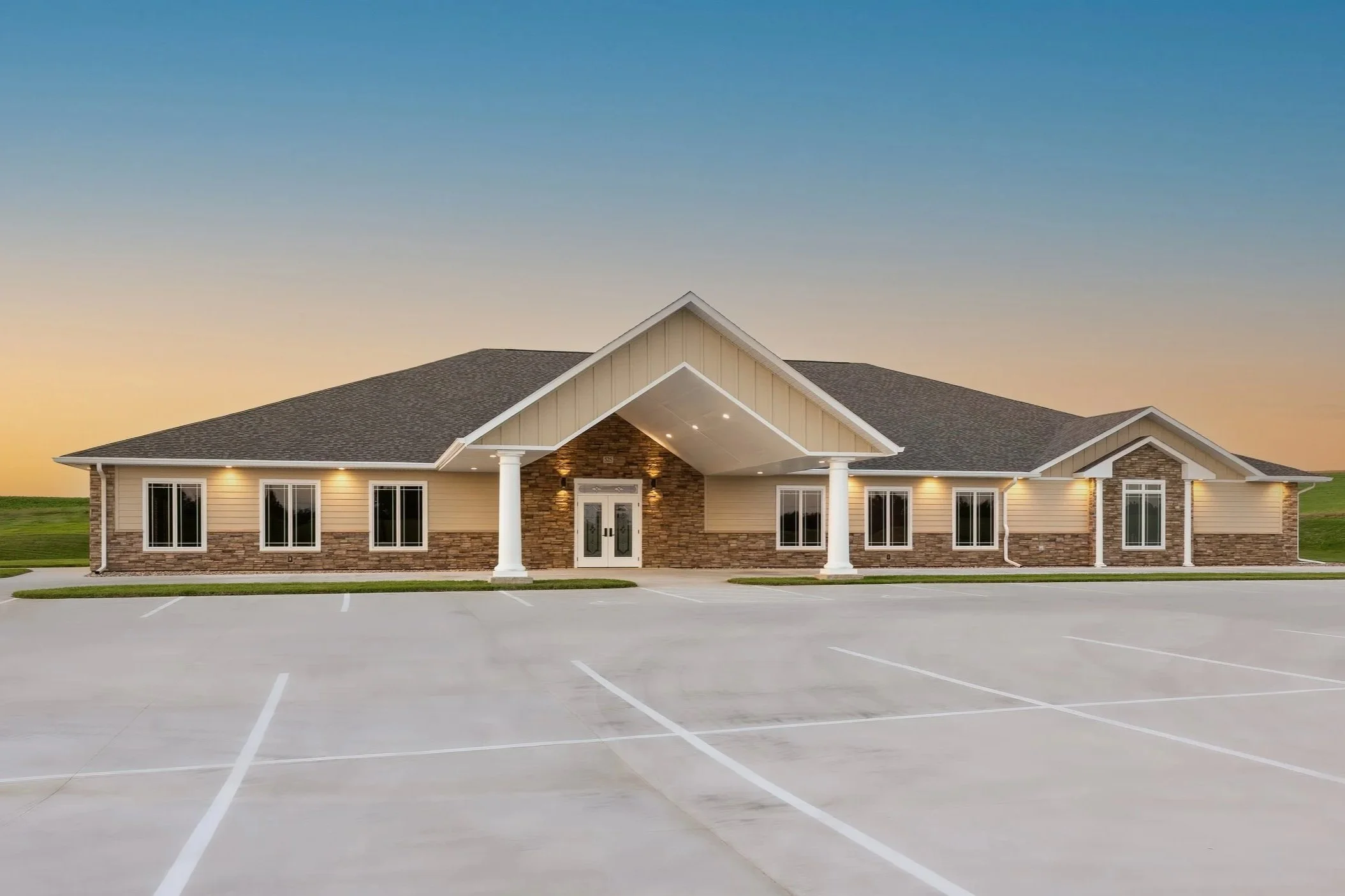
Families form an impression of a funeral home before they reach the door. Streaked fascia, a sagging porte-cochere, rust at the canopy edge - these read as neglect at exactly the wrong moment. We treat the covered entry canopy and porte-cochere as part of every funeral home roofing inspection, because the canopy-to-wall transition and the canopy drains are a recurring source of slow leaks and stained ceilings on these buildings. Staging, dumpsters, and crew parking are kept clear of the family entrance and the hearse approach. Loud tear-off is sequenced away from service hours whenever the calendar allows it.
Family-owned homes and regional operators alike
Oakland's funeral profession is a mix of multi-generational family businesses and regional ownership groups that manage several locations through a facilities office. Both need the same things from a roofer: a schedule that bends around services, an understanding of the regulatory side of the preparation room, and a crew that treats the property with respect. We work directly with owner-directors on single buildings and within the documentation and approval process that regional groups expect on portfolio properties.
Funeral Home & Mortuary Roofing Questions
How do you keep roof work from interfering with services and visitations?
We ask the funeral director for the weekly service and visitation calendar and build the work sequence around it. Loud tear-off and demolition are scheduled away from active service windows, the area above any room in use is protected, and we confirm a watertight dry-in before the building closes each evening. Our staging and access stay off the family entrance and the hearse approach throughout the project.
What happens to the preparation room exhaust during the project?
It stays running. The preparation-room exhaust stack maintains the negative pressure that contains chemical vapors, so we locate it before mobilization, write its flashing as a separate scoped item, and stage all work nearby so the exhaust never goes offline. The director approves the approach before we touch the membrane around the stack.
What roof system do you usually specify for an Oakland funeral home?
For a flat or low-slope mortuary, a 60-mil membrane over tapered polyiso is the common starting point, because the taper corrects the ponding that plagues older under-drained roofs in this part of the East Bay. On a wood-decked chapel span we confirm load capacity and attachment before settling on insulation thickness and fastening.
Can you reroof the chapel and its clear-span ceiling?
Yes. We treat a clear-span chapel like a small sanctuary roof, evaluating the deck, the span, and the existing attachment, then specifying a fastening pattern matched to the real wind uplift rather than a generic detail. Long-span steel and wood decks each get their own attachment verification.
Does the porte-cochere and entry canopy get included?
Always. The covered entry and porte-cochere are inspected on every visit because the canopy-to-building flashing and the canopy drains are a frequent leak source on these properties. We address those transitions as discrete items so the entrance stays dry and presentable.