
Claims Support
The roof file has to survive being read by someone who never saw the roof.
Most of the people who eventually read a roof claim file never set foot on the building. A broker, an underwriter, an out-of-town asset manager - they're working from what's on the page. Insurance claim coordination is how we build that file: an inspection organized specifically so someone who wasn't there can still understand what's wrong, what caused it, and what it will take to fix.
What goes into the package
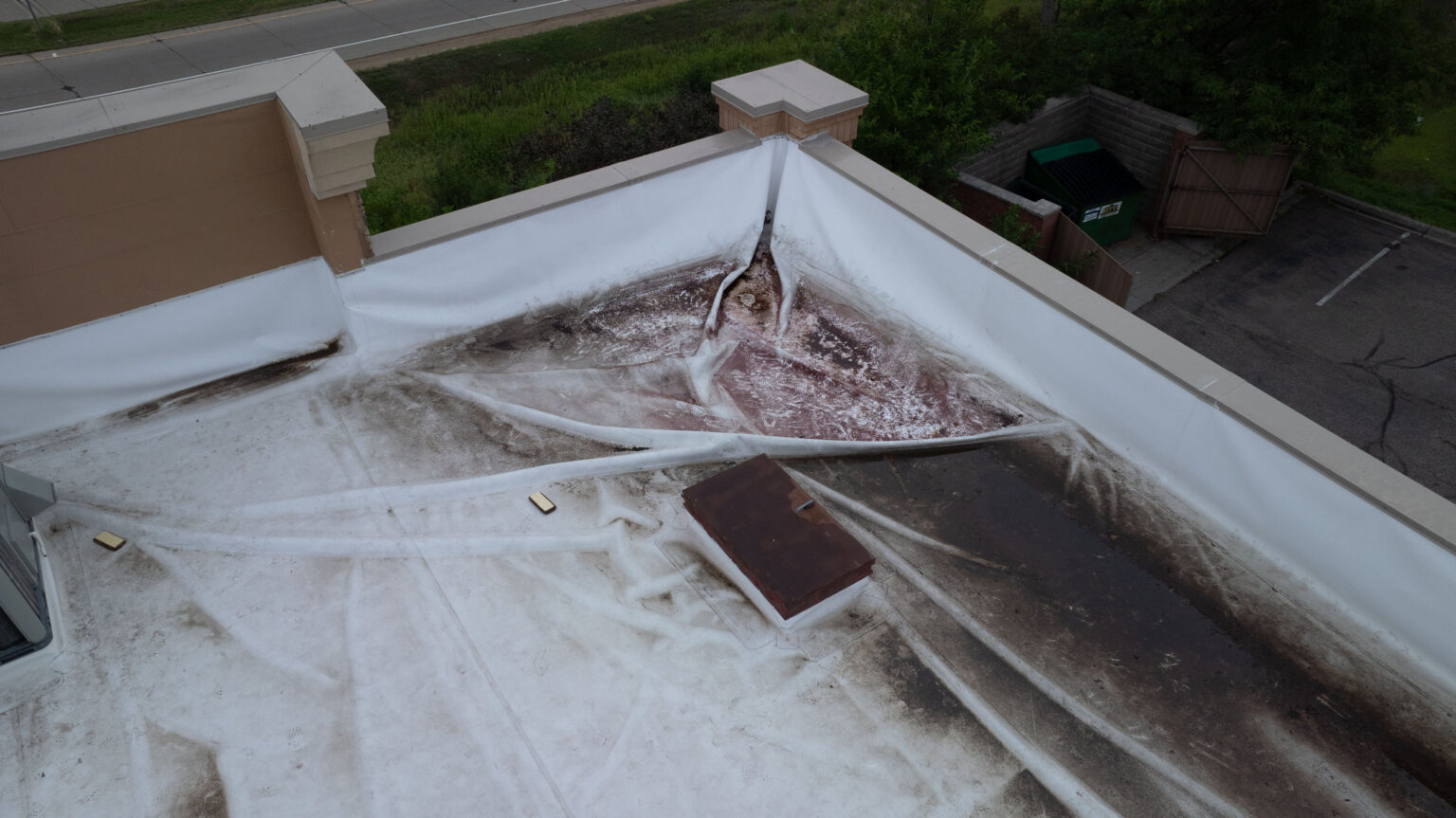
Every package starts with a full roof walk: membrane condition, seams, flashing, drains, curbs, penetrations, and any interior leak evidence. From there we build a dated photo log tied to specific roof locations, moisture or infrared readings where wet insulation is suspected, roof measurements for the affected area, and a written scope that separates repair from replacement and calls out code items - current cover-board and drainage requirements, for example - that a routine maintenance inspection wouldn't necessarily flag.
Coordinating with the people who read the file
Coordination, for us, means staying available while the claim moves through its own process: sending the package to whoever the property manager designates, answering an adjuster's technical questions about the roof assembly or the damage, and re-photographing a specific area if a reviewer asks for it. It does not mean we take over the claim. We're your roofing contractor, not a public adjuster - we document and substantiate the roof damage so you and your adjuster work from an accurate scope.
Portfolios need a consistent format more than a single building does
This service comes up most with property management firms and REIT-owned portfolios carrying several Oakland-area buildings, where the roofs are different ages and systems but the paperwork needs to look consistent from one property to the next. Using the same format across a portfolio - same photo structure, same measurement method, same scope language - makes it much easier for an asset manager to compare buildings and see which roofs already have current documentation on file versus which ones are overdue for a look.
Timing matters as much as content
A roof file is most useful when it exists before it's urgently needed. Many owners only request this after a leak has already reached tenant space, at which point the documentation is racing to catch up with damage that's still spreading. Buildings with a roof inspection already on file - condition, drainage, known trouble spots - start any claim from a stronger position, because the pre-loss baseline is already there instead of being reconstructed from memory after the fact.